Hype vs Reality: How Gamers Break Down New Releases in 2025
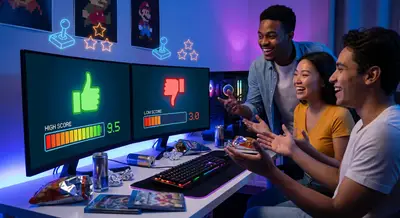
Every week a new “genre-defining masterpiece” drops, the trailers look god-tier, and your friends are already preloading. But is the game actually cracked… or just another overproduced XP sink? On Gamhood, game reviews aren’t just scores and buzzwords—they’re tools to help you dodge trash and lock in bangers. This guide dives into how modern gamers really dissect new releases, what matters beyond the marketing, and how to read between the lines of any review so you spend your time (and cash) on games that actually slap.
The New Meta of Game Reviews: Beyond Just a Number
The old-school “7.8/10 (too much water)” era is over. In 2025, a single score doesn’t cut it for most gamers. You’re juggling performance, progression, monetization, social features, replayability, and whether the game is going to be abandoned in six months. A review that matters now breaks a game into layers: core gameplay loop, technical stability, long-term support, and community health.
Instead of asking “Is this game good?”, serious players ask “Is this game good **for how I play?**” A sweaty ranked grinder needs different info than a chill co-op enjoyer. Good reviews call that out: they separate casual experience from hardcore, solo from squad-based, story-first from systems-first. When you read or watch a review, you want it to answer one big question: “What type of gamer is this game secretly built for?” If the review can’t tell you that, it’s basically just a prettier version of the box art.
The Core Loop: Where Real Opinions Are Made
Every game has a “core loop”—the thing you’re actually doing every 30–90 seconds. In a shooter, it’s snapping to targets and repositioning. In an RPG, it’s fighting, looting, and upgrading. In a sports game, it’s running plays and reading the field. A legit review focuses hard on this loop, because that’s what you’ll be doing for hours after the tutorial sparkles have faded.
Ask yourself while reading:
- Does the reviewer explain what you physically do in a normal session?
- Do they talk about whether that loop stays fun after 10, 20, 50 hours?
- Do they mention when the loop feels grindy, repetitive, or padded?
You want specific examples: “Gunplay feels weighty but ADS speed is sluggish,” or “Enemy variety is low so fights blur together after hour five.” That kind of detail tells you more than generic lines like “combat feels great” or “gameplay is satisfying.” When the core loop is fire, even mid graphics and clunky menus can slide. When the loop is mid, no amount of cinematic cutscenes can save it.
Performance Check: Frames, Bugs, and Day-One Gamble
Nothing kills hype faster than a stuttery boss fight or crashes in ranked. Modern reviews have to split opinions by platform because “runs great on PC” doesn’t help if you’re on a launch PS5 or Series S. A proper breakdown hits these points clearly: framerate targets, resolution, visual modes (Performance vs Quality), loading times, and major bugs or crashes.
Pay attention to what the reviewer tested:
- Did they try both quality and performance modes?
- Did they test busy areas (city hubs, big raids, team fights)?
- Did they mention input lag, shader stutter, or online desync?
Also watch for the “review build vs live build” disclaimer. Some outlets get early patches that don’t perfectly match launch day reality. Smart reviewers will update impressions after big hotfixes or performance patches, since studios often treat the first few weeks like a live beta. When you’re deciding to buy, look for reviews or impressions dated after launch plus a week or two—especially for PC ports and big live-service releases.
Live Service and Monetization: The Hidden Difficulty Setting
In 2025, how a game charges you is almost as important as how it plays. Battle passes, cosmetics, FOMO events, XP boosters, and gacha systems can quietly warp the entire experience. A real gamer-focused review doesn’t handwave monetization—it breaks it down like another gameplay system.
Key questions solid reviews answer:
- Can you unlock cool stuff just by playing, or is the grind insane?
- Are microtransactions purely cosmetic, or does “convenience” start to feel mandatory?
- Does the game time-gate content or rely on daily/weekly check-ins to keep you hooked?
- Is the battle pass fair, and can you realistically complete it without no-lifing?
If a review says “monetization is there but not intrusive” without receipts, that’s a yellow flag. You want specifics: “After 10 hours I hit a clear XP wall unless I bought the booster,” or “cosmetics are pricey but the base progression feels generous.” That’s the difference between a fair grind and a pay-til-it’s-fun treadmill.
Story, Atmosphere, and Vibes: The Intangibles That Matter
Not every game needs a galaxy-brain plot, but story and vibe still matter. A short, tight narrative brawler can hit harder than a 100-hour RPG that’s all filler. Good reviews talk about pacing—how often the game gives you new toys, new environments, new challenges, and how the story beats sync with gameplay.
Look for:
- How the world feels to explore: dense and reactive or empty and copy-pasted?
- Whether the writing matches the tone (serious, goofy, dark, chaotic) or feels awkward.
- Voice acting quality and whether characters feel like actual people or walking quest markers.
- How music, sound design, and UI support the vibe (are menus clean, does audio give good feedback, do abilities sound powerful?).
Even if you’re a “skip cutscene” player, these details can make or break immersion. A review that tells you “this game is hilarious if you love absurd, meme-ready dialogue” or “the story leans heavy into tragic moral choices” helps you decide if that’s your flavor or a hard pass.
Community and Post-Launch Support: The Long Game
A lot of modern games aren’t frozen in time—they’re platforms. Patches, balance updates, new characters, seasonal events, and DLC can completely flip community opinion over six to twelve months. That’s why the best reviews don’t just rate the disc; they consider the track record of the studio and the trendline after launch.
Savvy reviewers will check:
- Developer history: Do they fix issues fast or leave bugs rotting?
- Communication: Are patch notes clear and honest? Dev blogs transparent?
- Content cadence: Does the game get meaningful updates or just lazy cosmetics?
- Community health: Are servers stable? Is matchmaking fair? Any waves of cheating or exploits?
Pair reviews with player sentiment from forums and subreddits—but don’t get baited by pure salt. Look for consistent complaints or consistent praise across multiple sources. Reviews that include “current state” impressions after major patches are gold for live-service titles; they tell you if a rocky launch has turned into a sleeper hit or if a hype train has fully derailed.
Insider-Style Tips for Reading (and Using) Reviews Like a Pro
You don’t need to write reviews to think like a reviewer. A few habits will help you sort real signal from marketing noise:
- Find your reviewer “mains.” Notice whose tastes match yours across multiple games. If you align with their takes three or four times, their future reviews are basically cheat codes for your buying decisions.
- Focus on dealbreakers, not nitpicks. Look for issues that would specifically tilt you: bad solo experience, weak offline mode, heavy PvP focus, or weak endgame. A review might love something you’d hate.
- Watch raw gameplay, not just trailers. Pair written/video reviews with unscripted gameplay footage. You’ll quickly see if the review’s claims match reality.
- Use multiple sources. Compare at least two or three reviews (plus some player impressions) for big purchases. If they all highlight the same problems or praises, that’s usually accurate.
- Revisit reviews after patches. For games that improve over time, updated reviews or “re-review” articles can flip a “wait” into a “must play.”
This mindset turns reviews from entertainment into tools. Instead of asking, “Is this game overhyped?”, you’re asking, “Given how I play, what does this game look like in hour 20… and is that where I want to be?”
What Gamhood Aims to Do Differently With Reviews
On Gamhood, the goal isn’t to sound smart—it’s to help you make smart choices. That means calling out scummy monetization even in otherwise solid games, pointing out when a b-tier AA title is actually more fun than a bloated AAA release, and being upfront when something’s only worth it on sale or on a specific platform.
Expect breakdowns like:
- “Time-to-fun” (how long until the game actually gets good)
- “Grind index” (how much repetition you’re signing up for)
- “Squad value” (how much better it is with friends vs solo)
- “Tech risk” (how stable it is right now, not just in theory)
We’re here to talk about the weird bugs, the clutch moments, the broken builds, the dead modes, the perfect soundtracks, and the “I meant to play for 30 minutes and lost 4 hours” experiences. Honest, gamer-first reviews don’t just praise or dunk—they explain. With the right info, you can skip the FOMO, dodge the regret purchases, and fill your library with games that actually deserve your time.
Conclusion
In a world where every trailer screams “Game of the Year contender,” real game reviews are your filter, your shield, and your scouting report. When you know how to read them—digging into the core loop, performance, monetization, story, and long-term support—you stop chasing hype and start building a library that actually fits how you play. That’s the real win: not just owning the hottest titles, but owning the games that feel right every time you boot them up.
At Gamhood, that’s the mission: cut through the noise, keep it real, and help you lock in the games that are genuinely worth your GG.
Sources
- IGN – How We Review Games - Explains a major outlet’s modern review philosophy and scoring approach
- Eurogamer – Review Policy - Details how Eurogamer evaluates games, including post-launch updates and platform differences
- Game Developers Conference (GDC) – Postmortems & Talks - Developer insights into game design, live-service support, and core loop decisions that reviewers often discuss
- Entertainment Software Association (ESA) – Essential Facts Report - Industry stats on how and why players choose games, relevant to how reviews influence buying decisions
- NPR – How Microtransactions Changed Gaming - Background on monetization practices that modern reviews increasingly analyze